
Home › Study in UK › The interview
Path Plaza · UK programme · Pillar guide
What is the UK credibility interview, and what do they ask?
Checked on 26 September 2026 · Path Plaza desk · re-checked every 30 days
Being interviewed is not a bad sign — it is a standard part of assessment, and often your best opportunity. The questions centre on why this course, why this university, who is paying, and what comes after. What sinks people is a mismatch between what they say and what their documents show. Answer in your own words, matching your paperwork exactly.
01 · The call that is not an accusation
What is the credibility interview and does being called mean I am in trouble?
Being interviewed is not a bad sign, and it is often your best opportunity. The interview is where a doubt gets answered by a person rather than a document.
The instinct of every family that receives the interview notice is the same: what did we do wrong? The answer, from the guidance and the forums together, is usually nothing. The credibility interview is described as a standard part of assessment for a proportion of applications rather than an indication the file has been flagged. Selection is risk-based — taking account of nationality, immigration history, educational background and financial circumstances — and some applicants are selected at random, purely for quality assurance of the process itself. Being Pakistani is, bluntly, one of the risk factors the selection weighs; being interviewed says nothing about the family that the passport does not already say.
There is a second reason the interview should be read as an opportunity rather than an ordeal, and it is written into the process: the Home Office generally cannot refuse an applicant on genuine-student grounds without interviewing first, except on repeat or near-identical applications. Turn that around and it becomes one of the most reassuring sentences in the whole UK process — if a caseworker doubts whether you are a real student, the system's own rule is that you get to answer the doubt yourself, in person, before it can become a refusal. The interview is not the punishment that follows suspicion; it is the hearing that precedes it.
The families who do best in interviews are the ones who stop treating the interview as an exam to survive and start treating it as the one part of the file where a human being can see the applicant behind the paper. A doubt gets answered by a person rather than a document — the parent's job explanation in the applicant's own words, the course choice that traces a real line, the funding story told without notes because it is true. Preparation matters, and this page covers it. But the frame matters first: this is a conversation the rules entitle you to, and walking into it ashamed is both unnecessary and counterproductive.
02 · The questions, and the answers that end applications
What do they actually ask, and what sinks people?
Be able to explain your own course, your own funding and your own plan, in your own words, matching your documents exactly. Rehearsed answers that contradict the paperwork are worse than plain ones.
The reported question set is short, and everyone who describes the interview describes the same shape: why this course, why this university, who is paying and why, and what you plan to do afterwards. There is no secret bank of trap questions. What varies — completely — is whether the applicant's answers match the file sitting in front of the interviewer, and that is where the interview is won and lost.
| Question area | What a good answer sounds like | The trap |
|---|---|---|
| Why this course? | A real line from your past study or work to this programme, in your own words | A module list memorised from the brochure, recited identically to a cousin's answer |
| Why this university? | Specific reasons that fit you — the course, the city, the cost | Rankings recited with no personal reason anywhere in the sentence |
| Who is paying, and why? | The sponsor's actual occupation and relationship, matching the statements | "My father" — and no ability to say what he does or where the money came from |
| What comes after? | A consistent plan, including lawful part-time work or the Graduate Route if true | Invented promises of returning home that contradict the rest of the file |
The most commonly flagged credibility problem is not nerves, and not accent, and not a wrong fact about the university: it is a mismatch between what the applicant says and what the documents show. The applicant who says the father runs a business while the statements show a salaried account; the applicant who names a first choice of university the application history contradicts; the applicant whose course explanation does not survive the first follow-up question. Vague answers about the course or the funding are described as ending applications — and one approved applicant makes the sharper observation that many refusals cite not being satisfied the applicant is a genuine student even where the finances were fine.
That last point deserves its own paragraph, because it reorders what families prepare for. The money file is checked by documents and either stands or does not; the interview exists precisely for the judgement the documents cannot make. So the preparation is not a script — it is ownership: the applicant who can explain their own course, their own funding and their own plan, in their own words, matching the documents exactly, is prepared. Rehearsed answers that contradict the paperwork are worse than plain ones, because they convert a doubt into a demonstrated inconsistency. The desk's interview preparation is therefore a document exercise as much as a speaking exercise: the applicant rehearses with the CAS, the statements and the sponsor's file open, until every answer they give could be checked against the paper and survive the checking.
03 · The honest answer that is also the safe one
Will saying I want to work in the UK afterwards count against me?
The Graduate Route is a lawful route and saying you intend to use it is not held against you. Pretending otherwise, and being caught in the inconsistency, is what does damage.
Every Pakistani family asks this question in the first meeting, usually in a lowered voice, as if confessing a plan that must be hidden. The guidance answers it directly: if you plan to work part-time during your studies or move to the Graduate Route afterwards, you should say so. Wanting to stay on afterwards is not itself a reason for refusal. The routes exist in law, the part-time work permission is printed on the visa itself, and the caseworker asking the question knows both facts better than the applicant does.
What the interview is testing on this subject is not ambition but consistency. Applicants are advised to address post-study plans clearly and consistently across the application and any interview — the personal statement, the interview answer and the supporting letter should all tell the same story. The applicant who says "I will return immediately" while the file's work-and-study section was written around the Graduate Route has not made a safer answer; they have made two answers that cannot both be true, and the interviewer's job is to notice exactly that.
The honest framing, which is also the effective one, sounds like this: the primary purpose is the course; the part-time work allowance, if used, exists to support living costs within its legal limits; and afterwards, the Graduate Route is a lawful option that will be considered on its own terms when the time comes. That answer is true, matches the file, and commits the applicant to nothing. The Graduate Route pillar covers what the route actually is — a search window, not a career — and the interview answer is easier to give honestly when the family has already read it honestly.
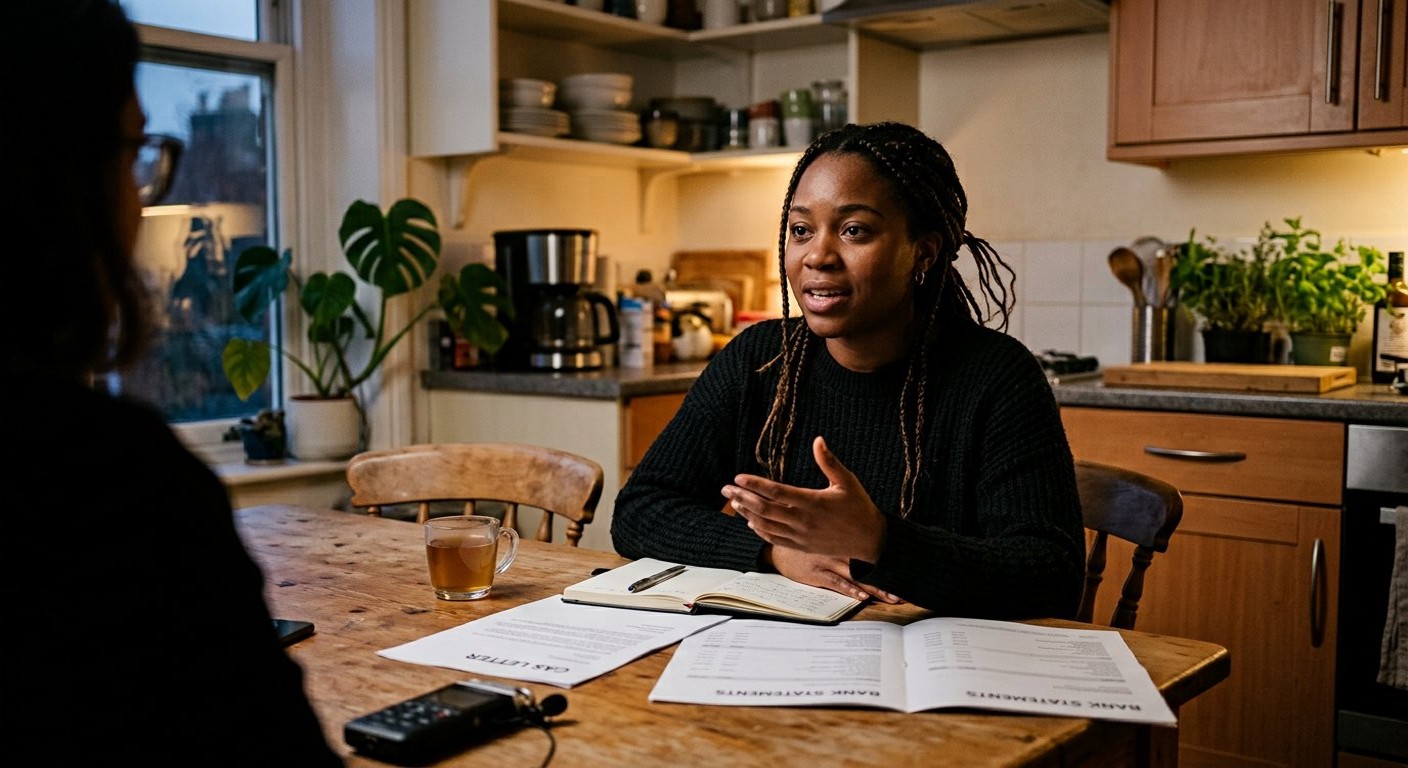
Rehearse with the file open
The interview is a document exercise as much as a speaking exercise — every answer should survive being checked against the paper beside you.
The document and attestation checklist is free on WhatsApp — below.
04 · Silence, and what it usually means
Why is my application taking longer than the published time?
A delay usually means something is being checked, not that something is wrong. Tell your university compliance team it is running long, and make sure they know.
The published processing time is a service standard, not a promise, and applications that outrun it generate a particular kind of fear — the fear of silence. A list circulated among applicants records the reasons actually given for extended processing, and it is worth reading slowly because every item on it is procedural: information requiring further consideration; further evidence needed; documents requiring verification; an interview being required; further information on personal circumstances; or simply increased demand. Not one of them reads "the application has failed". They read, together, like a description of a system checking its work — which is what a delay is.
One commenter adds the point that matters most to a frightened family: extra scrutiny such as bank verification does not necessarily mean trouble. It means a statement is being verified — the same verification the money pillar prepares for when it tells families to choose a bank that answers. The delay that feels like a verdict is usually just a document sitting in a verification queue, and the family that knows this sleeps better and harasses no one.
There is one action the desk takes on every long application, and it is not chasing the Home Office: tell your university compliance team it is running long, and make sure they know. The university is the sponsor — the CAS is theirs — and a sponsor asking about a stalled application is an institutional question with an institutional answer, where an applicant asking is one voice among many. A delay usually means something is being checked, not that something is wrong; the compliance team's job is to find out what, and the family's job is to have told them it was running long in the first place.
Coming with the UK video series
The credibility interview — on video, in Urdu
The four question areas and the mismatch trap, with the answers rehearsed against the real file — in Urdu. In production; this page is the written reference until it ships.
Free one-pager · WhatsApp · no forms
Get the document and attestation checklist on WhatsApp
The interview tests consistency with your own documents — this is the printable file checklist, with the TB test timing, name consistency and the slow items flagged.
Get the document checklist → +92 315 5009620 · Mon–Fri 11AM–7PM · Path Plaza (SMC) Pvt Ltd, 304 Upper Mall, LahoreWhere this sits in your journey
The interview comes after the file is built and before the decision — it is the file's one chance to speak.
Universities decide admissions. The UK authorities decide visas. We prepare honest, complete files — that is the entire promise, and it's in writing.