Home › Study in UK › The CAS
Path Plaza · UK programme · Pillar guide
What is a CAS, and what should you check on it before you apply?
Checked on 26 September 2026 · Path Plaza desk · re-checked every 30 days
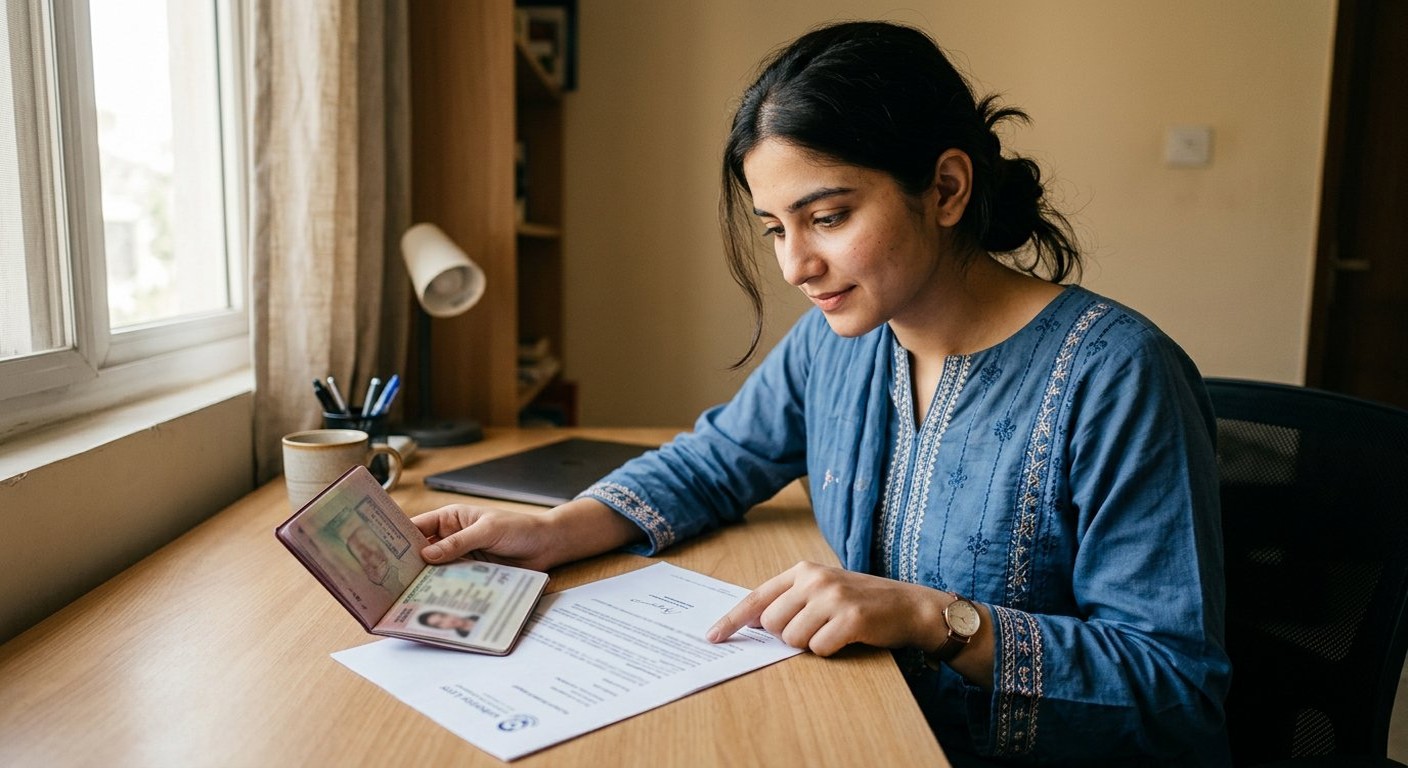
The CAS is the university's confirmation of acceptance for studies — the reference your whole visa application hangs on. Read every field the day it arrives and compare it to your passport, letter by letter: name spelling, course title, dates, fees paid. Corrections take days; a refusal costs the intake. And never apply before the CAS is issued.
01 · The document the visa hangs on
What is a CAS and what should I check on it?
Read every field the day it arrives and compare it to your passport, letter by letter. Corrections take days; a refusal costs the intake.
The CAS — Confirmation of Acceptance for Studies — is the reference the university issues once you have accepted the offer and met its conditions. In the machinery of a UK application it is closer to a spine than a document: the visa form asks for it, the money file is calculated from it, the credibility interview is conducted around it, and the eventual decision is made in its shadow. An applicant without a CAS is not an applicant at all, whatever the offer letter says, which is why the guidance is blunt: do not apply before the CAS is issued. A "guaranteed" place described in an email is marketing; the CAS is the university putting its sponsorship licence behind you.
Because everything else keys off it, an error on the CAS does not stay an error on the CAS — it becomes an inconsistency in the file, and inconsistencies are what UK refusals are made of. The guidance stresses the same short list every time, and the desk checks the same list the day the document arrives, with the passport open beside it:
| Field | Check against | If it is wrong |
|---|---|---|
| Name spelling | Passport, letter by letter — every given name in order | Request a corrected CAS before anything else moves |
| Course title | The exact programme you accepted | A wrong title is a refusal waiting to be filed |
| Course dates | The intake you planned — start and end | Wrong dates wreck flights, enrolment and the money window |
| Fees paid | Your actual payment records | A mismatch breaks the arithmetic on the money file |
| English test | The certificate you actually hold | The wrong approval cannot be swapped afterwards — below |
| Sponsor licence number | Present and complete on the letter | An incomplete CAS is not a CAS |
The reason for checking the day it arrives is arithmetic: corrections take days, and the intake does not wait. A misspelled name fixed in a week is a story; the same misspelling discovered at the visa stage — or worse, at the airport — is a refusal that costs the year. Families who treat the CAS as a formality are treating the one document the university has formally guaranteed as the least-checked paper in the file. It deserves the opposite: the first check, the closest check, and the check against the passport rather than against memory. And the check is done by two people, not one — the student reads the CAS against the passport while a parent reads the passport against the CAS, because the eye that expects a correct document is the eye least likely to find the error in it.
02 · When the place disappears under the visa
My visa took months and the university withdrew my CAS. What happens then?
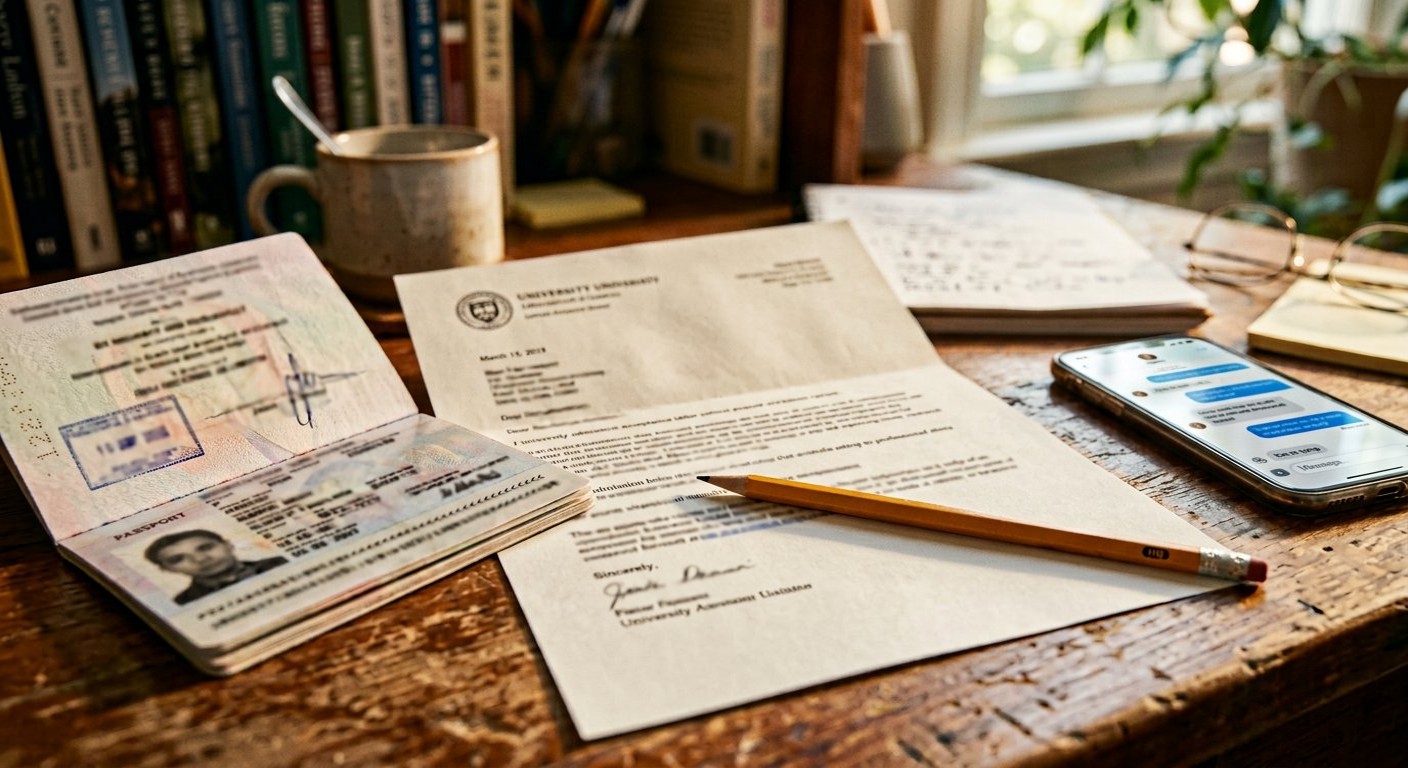
Before you book a flight, confirm in writing with the university that your CAS is still live and you may still enrol. A granted visa does not mean a place still exists.
This is the UK's least expected failure, and the threads describe it in painful detail. A Pakistani student's visa arrived after roughly eighty days — the better part of three months — and the university withdrew its sponsorship the same day the visa arrived. The student travelled anyway: loans had been taken against the family's name and the fees were non-refundable, so the flight was bought on the strength of a visa that no longer had a university behind it. The thread is worth reading twice, because every element of it is a decision a family could have made differently.
Commenters on the same thread describe the counter-case: a cousin checked with the university before booking any flight and found the CAS had been cancelled for late enrolment — a five-minute email that saved a non-refundable journey and an arrival with nowhere to enrol. The lesson is not that universities are careless; it is that a granted visa and a live place are two different things, granted by two different authorities, and the second can expire while the first is still being printed. Universities enrol real cohorts on real calendars; when the visa outlasts the enrolment window, the sponsorship goes.
Hence the rule, which the desk applies to every UK file without exception: before you book a flight, confirm in writing with the university that your CAS is still live and you may still enrol. Not by phone — in writing, so the answer is a document. The email costs nothing; the flight, the arrival fund and the family's year are what it protects — and the written answer, kept with the file, is also the document that supports a fresh application if the worst has already happened. A granted visa does not mean a place still exists, and the three minutes of checking are the cheapest insurance in the whole UK process.
03 · The test with two names
Is IELTS Academic the same as IELTS UKVI?
Confirm the letters UKVI appear on the booking, not just IELTS Academic. It is the same exam sat under a different approval, and the wrong one cannot be swapped afterwards.
This is listed, flatly, as a common refusal cause for Pakistani applicants: booking the standard IELTS Academic test when the file needed IELTS UKVI Academic. The trap is genuinely cruel, because the two exams are the same paper — the same sections, the same difficulty, the same score — sat under a different administrative approval that allows the result to be used for UK immigration purposes. The candidate studies identically, performs identically, and holds a certificate the Home Office will not count, because the approval attached to the sitting was the wrong one.
The numbers frame the trap without softening it: the visa minimum is quoted at 5.5 overall, while the university's own requirement is usually higher — which means a student can clear the university's bar with a strong result and still hold the wrong instrument for the visa. And the wrong one cannot be swapped afterwards: there is no conversion, no letter, no fee that turns a standard result into a UKVI one. The fix is sitting again, paying again, and hoping the new date falls before the window closes.
The prevention is a habit, not an insight: confirm the letters UKVI appear on the booking, not just IELTS Academic — at the moment of booking, before the fee is paid, with someone at the desk reading the confirmation. The desk's UK files carry the booking confirmation itself in the file, with the UKVI line visible, precisely because the error is cheap to prevent at booking and ruinous to discover at decision. It is the same principle the whole CAS section teaches: the document is checked the day it exists, against the requirement it actually has to meet, and never against the requirement the family remembers.
Confirm it in writing
A granted visa and a live university place are two different things, granted by two different authorities — the email that confirms the second is the cheapest insurance in the process.
The CAS check sheet is free on WhatsApp — below.
04 · The steps that only exist from Pakistan
What else is specific to applying from Pakistan?
The tuberculosis certificate is the step most often left late. Book it early and check the clinic is currently approved, because the approved list changes.
Every country's applicants carry their own extra steps, and the Pakistani file carries four. The tuberculosis test certificate, from a clinic approved by the Home Office — with approved clinics in Karachi, Lahore and Islamabad — is the one that decides timelines, because appointments fill, results take their time, and the certificate has to exist before the application is complete. Biometrics run through the visa application centre, which means appointment availability is part of the family's calendar. The immigration health surcharge is paid upfront, online, before submission — a real sum leaving the account at the worst possible moment for the 28-day window. And the visa fee itself is quoted at £558 following an April 2026 increase — a figure to re-verify at filing, like every fee on this site.
One quietly reassuring point for Pakistani families, because it answers a question the desk hears weekly: rupee bank statements are acceptable, converted at the rate on the statement date. The money does not need to be moved into pounds to be counted; it needs to be real, reachable and above the line in the currency the family actually holds it in. The conversion is the caseworker's arithmetic, not the family's errand.
Among the four steps, the tuberculosis certificate is the one most often left late — so the instruction bears repeating with its reason: book it early and check the clinic is currently approved, because the approved list changes. A clinic that was approved when a cousin applied may not be approved now; the certificate is only as valid as the clinic's current standing. The desk books the TB appointment in the same week the CAS is requested, on the logic that the two documents most likely to decide the timeline should start moving on the same day — and the full Pakistan-specific checklist, with the slow items flagged, is on the free sheet below.
Coming with the UK video series
The CAS, on video — in Urdu
The six fields checked against a real passport, and the withdrawn-CAS email that saves a year — in Urdu. In production; this page is the written reference until it ships.
Free one-pager · WhatsApp · no forms
Get the CAS check sheet on WhatsApp
A tick-box page matching each CAS field against the passport — doubles as the clinic handout, with the UKVI test line and the Pakistan-specific steps.
Get the CAS check sheet → +92 315 5009620 · Mon–Fri 11AM–7PM · Path Plaza (SMC) Pvt Ltd, 304 Upper Mall, LahoreWhere this sits in your journey
The CAS arrives after the offer and before the visa — it is the document that converts an admission into an application.
Universities decide admissions. The UK authorities decide visas. We prepare honest, complete files — that is the entire promise, and it's in writing.