Home › Study in Malaysia › After graduation
Path Plaza · Malaysia programme · Pillar guide
Is Malaysia worth it, and can you stay afterwards?
Checked on 25 September 2026 · Path Plaza desk · re-checked every 30 days
For most Pakistani students, Malaysia is a degree destination, not a settlement route: you go for an English-taught, internationally credible qualification at a cost well below the UK or Australia, and the realistic plan is a career back home or in the region afterwards. Framed that way, the numbers work. Framed as migration, they do not — and the plan should be chosen before the fees are paid.
01 · The question the market avoids
Why do people study in Malaysia if it is hard to get a job there afterwards?
Most students go to get the degree and then leave, and that is a perfectly sound plan. The mistake is going while assuming you will stay.
A thread asking exactly this received candid answers that mostly agree: most international students never intended to stay. They came for an English-taught degree, a safe environment, and a total cost three to four times below the UK or Australia for the same certificate — often for a qualification awarded by a UK or Australian institution — and several describe it plainly as a step to somewhere else.
The job-market side is described just as honestly. One graduate with a first-class engineering degree describes applying to more than 200 positions without a single interview, while local classmates were placed within months. Others state that foreigners do secure roles where skills and experience are strong. Both accounts are true, and the market quotes whichever one suits it; the difference between them is the one this page exists to name — a plan that assumed the degree would carry itself, and a plan that knew what came after.
A practical note on how to read the 200-applications account, because it is quoted at both extremes: it is one graduate's experience, not a rate, and it is cited here precisely because the same thread contains the opposite experience from other graduates. What the honest desk takes from it is neither the worst reading nor the best — it is that the local market rewards preparation the Malaysian system does not provide automatically: regional-language comfort, internship experience inside the programme (the internship route is the legal and useful one), and a CV built before the final year rather than after it.
The honest formulation, and the one we use at the first meeting: Malaysia is a strong way to obtain an internationally credible degree at a manageable cost. The local labour market is a separate question with its own odds, and nobody at this desk will quote them as a promise. Students who go with the degree-first plan and build regionally useful skills report good outcomes — the thread's contented graduates are, nearly without exception, the ones who treated the three years as a degree with a life attached, rather than a probation for a country; students who go assuming the country will keep them report the thread above.
02 · The settlement question, plainly
Is Malaysia a route to permanent settlement?
Malaysia is a strong way to obtain an internationally credible degree at a manageable cost. It is not a settlement route, and saying so at the first meeting saves everybody time.
Published guidance is unusually direct on this, and we will be equally direct: Malaysia is described as good for a few years of internationally relevant experience and less straightforward as a place to settle permanently — and the same guidance advises those whose main goal is migration to consider other destinations. A consultancy that lets a family believe otherwise is selling a country the family did not choose.
This is not a criticism of Malaysia. It is a description of what the destination is for: a degree destination, with a comfortable stay attached, and a system that expects most international students to leave when the studies end. The pass pillar shows the same design from the inside — a pass tied to enrolment, renewed on results, cancelled on exit. A country built for settlement looks nothing like that.
Saying so at the first meeting saves everybody time — the family's money and the desk's credibility. It also, quietly, improves the degree outcomes of the students who do go: a student who knows the pass ends with the programme uses the pass years deliberately — internships inside the programme, a final-year CV, applications opened in both markets — rather than discovering in the last semester that the clock was running. Families sometimes ask whether this makes Malaysia a mistake, and the answer is no — it makes Malaysia a specific tool for a specific job. A family that pays degree prices for a degree gets full value. A family that pays degree prices for residency gets a degree they did not want and a residency they will not receive, and the tragedy in that sentence is that it was avoidable at the first meeting, for free.
Where migration is the genuine goal, the honest advice is a different destination entirely; where the degree is the goal, Malaysia earns its place on the list on its real merits.
03 · What the degree is worth
Is the degree useful back in Pakistan and in the region?
The realistic prize is a recognised degree plus regional exposure, then a career here or in the region. Framed that way the numbers work. Framed as migration, they do not.
Commentary consistently describes a Malaysian qualification — particularly from a branch campus of a recognised foreign university — as portable across the wider regional market, with graduates moving on to neighbouring countries or returning home with a credential employers recognise. The portability is the point: the certificate travels even where the graduate's right to stay does not.
Back in Pakistan, the degree meets the same case-by-case assessment every foreign degree meets — the recognition pillar covers that process in full, and the family that checks before enrolling has answered the question while it is still cheap to answer. In the region, the English-taught programme and the familiarity with a multi-cultural environment are the quieter assets: Gulf employers, regional offices and multinationals read both fluently.
It is also worth naming the intangible that graduates report valuing most on return: the ease of the first job conversation. A Pakistani interviewer reading a Malaysian degree asks fewer suspicious questions than one reading an unfamiliar flag — the region is known, the universities are known, and the branch-campus certificates carry names the interviewer already trusts. That familiarity is not a salary, but it shortens the distance between the certificate and the first payslip, and graduates describe it as the quiet advantage of the choice.
So the realistic prize is the degree plus the exposure, then a career here or in the region — and the numbers that make Malaysia worth it are the cost numbers, which is why the money pillar belongs at the centre of this decision rather than at the end of it.
04 · The strength, stated without decoration
Is it comfortable there as a Pakistani Muslim student?
This is the one area where the honest answer and the marketing answer agree. Say it plainly and without decoration and it will be believed.
Here the honest answer and the marketing answer converge, and this page states it without decoration: a Muslim-majority country, halal food widely available, English used as a working language in universities and business, a short flight from home, and a large international student community that includes many Pakistanis. Families who visit describe relief; students describe ordinary life — and "ordinary" is the achievement: prayer rooms where expected, food without label-checking, and a rhythm of daily life that does not require cultural translation. For parents sending a daughter or a youngest son abroad for the first time, that ordinariness is worth more than any ranking table.
The comfort is real, and it is worth being precise about what it is not: it is not a proxy for the outcomes above. Halal food does not answer the job-market question, and a short flight home does not change the settlement assessment. Daily life in Malaysia is a genuine strength of the destination — arguably its most consistent one — and it deserves to be weighed as exactly that: one strong fact among the honest set, not a summary of them.
Said plainly and without decoration, it will be believed — and the plain version includes the caveats that decoration would smooth over: the comfort is real, the living costs are manageable, the community is genuinely large, and none of it changes a single line in the right-hand column of the ledger below. That sentence is the editorial rule for this whole page, and for this programme. The destination earns the family's decision on facts; the facts here are good ones.
| Reliably delivers | Does not deliver |
|---|---|
| An English-taught degree at a cost well below the UK or Australia | A local labour market that absorbs foreign graduates as a matter of course |
| A safe, comfortable, Muslim-majority environment with halal food widely available | A settlement or permanent-residence route |
| A portable qualification, strong regionally, assessable at home | A guarantee of any outcome — recognition is case by case, jobs are earned |
| A short flight home and a large international student community | Term-time work to help with fees — not permitted |
Read the right-hand column before the left, and if the family can live with it, the left-hand column is real and worth having. That is the whole verdict, and it is the one the desk gives in the first meeting — before a rupee is spent, while the family can still walk away from a decision that is wrong for them, which is the only time an honest verdict is worth anything.
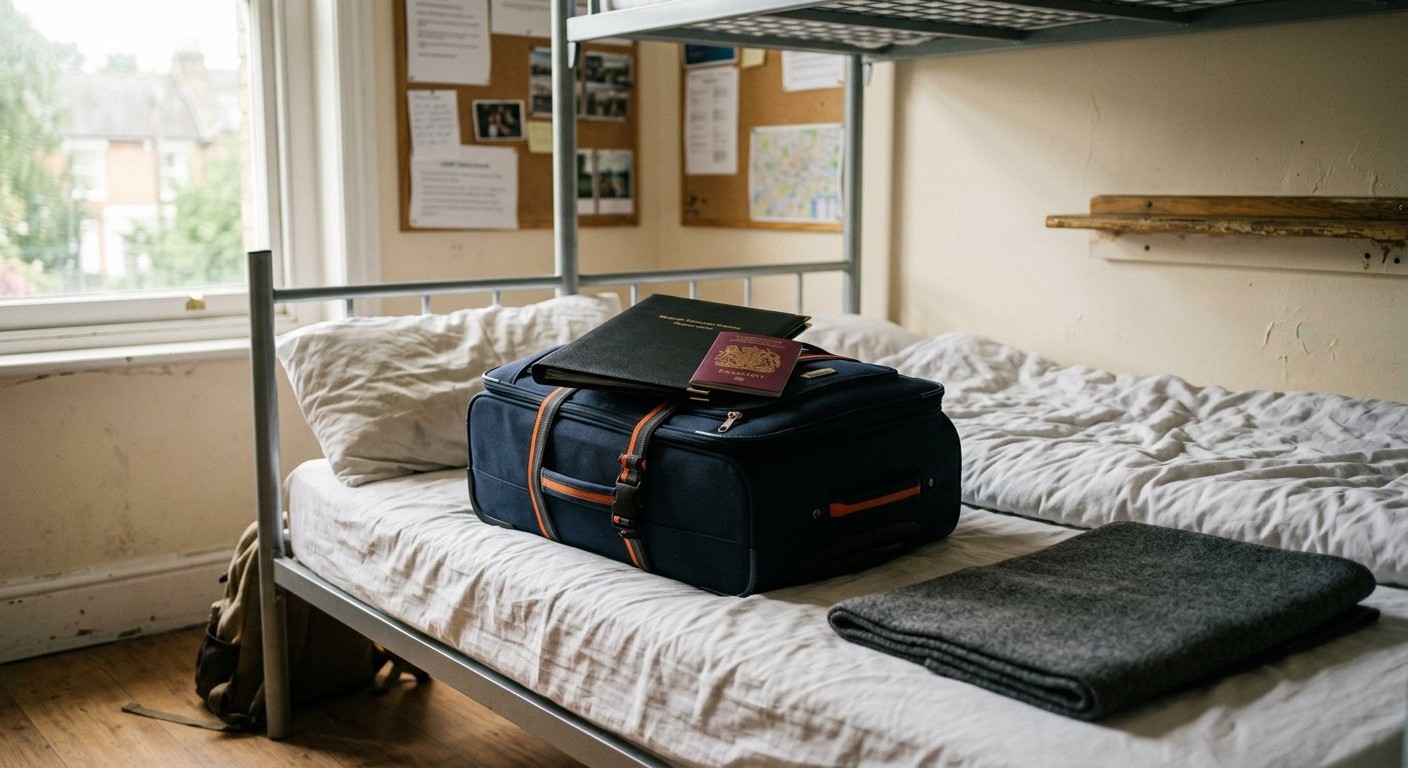
The plan that works
The degree, the exposure, the career here or in the region — decided before the fees, not after the flights.
The work rules sheet is free on WhatsApp — below.
Coming with the Malaysia video series
The honest verdict — on video, in Urdu
The job-market accounts read fairly, the settlement answer given straight, and the strengths stated without decoration — in Urdu. In production; until it ships, this page is the written reference and the desk speaks the same verdict in person.
Free one-pager · WhatsApp · no forms
Get the work rules sheet on WhatsApp
The rule that shapes every honest plan for Malaysia — what work is allowed, when, and what it can never cover.
Get the work rules sheet → +92 315 5009620 · Mon–Fri 11AM–7PM · Path Plaza (SMC) Pvt Ltd, 304 Upper Mall, LahoreWhere this sits in your journey
The verdict is the last page read and the first question asked — it belongs at the first meeting, not the last semester.
Universities decide admissions. The Malaysian authorities decide visas. We prepare honest, complete files — that is the entire promise, and it's in writing.