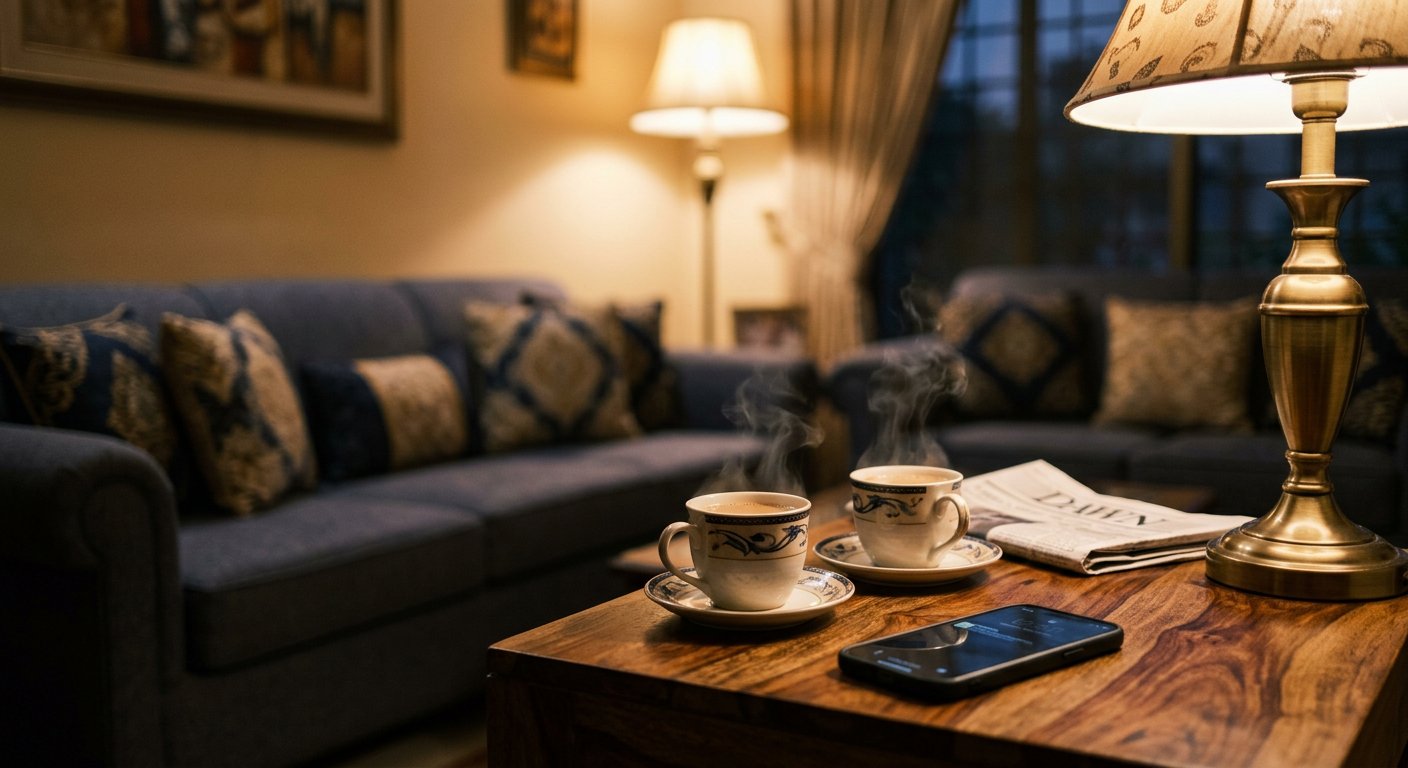
Photograph: two steaming cups of chai on a wooden side table beside a phone in a warm lamplit living room

Home  ›  Study in Turkey  ›  Life in Turkey

Path Plaza · Turkey programme · Pillar guide · written for parents

Life in Turkey: the parents' questions, answered plainly

Daily life, food and mosques, work rules, community, the language year and hostels for daughters — described as it is, with nothing sold and nothing promised.

✓ Checked on 23 September 2026 · Path Plaza desk · re-checked every 30 days
Direct answer

This page is written for parents. Daily life in Turkey described in practical terms — where students live, what they eat, how they travel — with the work rules stated honestly, the language year taken seriously, and hostel arrangements explained without safety claims or statistics. The first three months are the hardest part, and that is normal.

This page is for the parents, because parents decide more than students admit — and because the questions parents ask are usually answered with either a brochure or a shrug. Here you get neither. We describe arrangements as they are, we make no safety claims, we use no statistics, and we sell nothing on this page. Where something must be confirmed with an institution, we say so, and we say exactly what to ask.

This pillar is part of our Study in Turkey hub. It pairs with the cost guide — because a parent's money question is a budget question — and with the residence permit guide for the paperwork that follows arrival.

01 · The first question, always

Is Turkey safe for Pakistani students?

Short answer

We make no general safety claim about any country or city — and we use no statistics here. What we can do is describe daily life in practical terms and name who to contact when something goes wrong: the university's student office first, the consulate, and us. The honest difficulty of the first three months is homesickness, not headlines.

You will notice this page refuses to answer the question the way it is usually answered — with a claim. "It is perfectly safe" is a sentence nobody honest can write about any country, any city, any neighbourhood, and we will not write it. What a parent can actually use is smaller and truer: a description of daily life, and a list of doors to knock on.

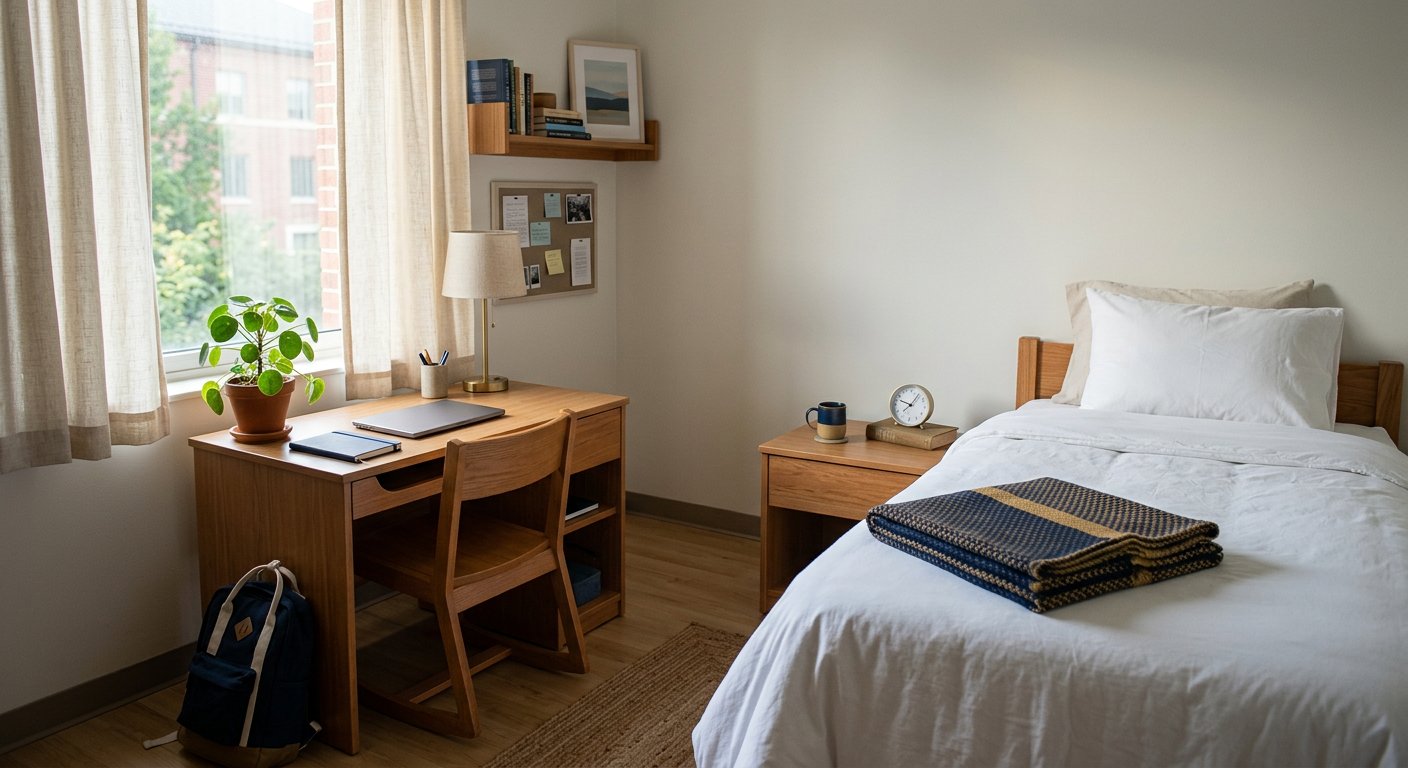
Daily life, in practical terms: students live in university dormitories, state dormitories or shared private housing; they travel by public transport — metro, bus, the systems students everywhere use; they live among other students, in student-heavy districts of cities that have hosted foreign students for decades. That is the ordinary texture of the thing, and it is a fair picture to hold.

The doors, in order. If something goes wrong, the university's student office is the first contact — it exists for exactly this, and it is staffed in working hours by people whose job is student welfare. The Pakistani consulate is the second. And we are the third — not because we can intervene anywhere, but because a family that can ask a question in Urdu, of someone who knows the file, panics less. One card with all three numbers is worth more than a year of reassurance.

And the honest part, said plainly because it is the part that actually arrives: the first three months are the hardest, and their difficulty is homesickness, not headlines. Missing home is not a sign of a wrong decision; it is the price of a new life beginning, and it fades as the new life becomes real. Naming that is more useful to a parent than any claim we could make instead.
02 · Daily life, quietly important

What about halal food and mosques?

Short answer

Daily life answers itself quietly in most Turkish cities: halal food is the norm rather than the search, and mosques are part of the ordinary landscape of daily life. This page describes arrangements as they are — the practical details of your specific city are worth confirming with students already there.

This question matters more than its place in most guides suggests, because it is asked every day, three times a day, by the student — not once, at the planning stage, by the parent. The practical answer: in most Turkish cities, halal food is the norm rather than the search, and mosques are part of the ordinary landscape of daily life — present in the neighbourhoods students live in, open at the hours students need them.

We describe arrangements as they are, and we stop there — because the details that matter are local and personal: the canteen at your university, the nearest mosque to your dormitory, the grocery that sells what your family cooks. Those details are best confirmed by students already living in that city, and every university's international office will put a new student in touch with senior ones. Ask that question in your first email; it is a good first question.

03 · The budget-critical rule

Can my child work part-time while studying?

Short answer

Do not build the first year's budget on earnings. A student residence permit is not a work permit; undergraduates generally cannot work in the first year, and from the second year limited hours apply — the current rule must be confirmed. The employer applies, not the student, and informal work is never the answer.

Many families build a budget on an income that the rules do not allow — and the budget breaks in the first year, exactly where it is hardest to repair. So the warning comes first: a student residence permit and a work permit are two different things, and holding the first does not grant the second.

The shape of the rules, stated honestly: undergraduates generally cannot work in the first year. From the second year, limited hours apply — and because hours figures change, we state none as settled: confirm the current rule before any plan depends on it. Master's and doctoral students sit under different rules again. When work is possible, it is the employer who applies for the permission, not the student — which tells you the practical reality: the arrangement must be worth an employer's paperwork.

Two lines we will not cross, ever. Informal and undeclared work is not a workaround — it is a risk to the permit itself, and we do not suggest it even as an aside. And remote or freelance work sits in a grey area that we name as a risk to the permit, not as a solution. The budget a family can rely on is the budget that counts no student earnings — our cost guide is built exactly that way.

04 · The unspoken fear

Will my child be alone in Turkey?

Short answer

A Pakistani student community exists across Turkish universities — and the first month is still hard, because both things are true. Homesickness in the first three months is normal, not a sign of a wrong decision. What helps is knowing people before arrival, and the university's student office from day one.

Both things are true, and an honest page says both: a Pakistani student community exists — across Turkish universities, in the cities students choose, in the student associations that organise around national days and ordinary dinners alike — and the first month is still hard. Community does not switch on automatically; it is found, and finding it takes a few weeks of being the newcomer.

What actually helps is concrete. Knowing people before arrival: a senior student from the same city, an association's contact, one name at the university's international office. The student office from day one — it is the place homesick students should have walked into in week one, not month three. A phone routine agreed with home — not constant, which strangles the new life, but regular, which holds the old one. And the first three months named for what they are: normal. A wrong decision does not announce itself as homesickness; homesickness announces itself as homesickness, to everyone, everywhere, and then it passes.

05 · The year before the degree

How hard is the Turkish language year?

Short answer

It is a full academic year before the degree content begins — not a formality — and it must be taken seriously. The degree effectively starts a year later, which is why planning matters. What helps most is starting the language before departure, even a little; we state no figures about who struggles.

We refuse to call the Turkish year easy, because that word has cost families a year. It is a full academic year — a real course, with a level to reach and an examination at the end of it — and the students who treat it as a formality meet it as a wall. The refusal to soften this is the service; there is no other honest way to say it.

Two consequences follow, and both belong in the family's planning. The degree content effectively begins a year later than the acceptance letter suggests — the timeline, the budget, the expectations all shift by one year, and our cost guide budgets the Turkish year as a real year of living. And the year rewards preparation: starting the language before departure, even a little — an alphabet learned, a hundred words, a used textbook worked through — changes the first months from survival to study. We state no figures about how many students struggle; we simply refuse to let yours be the one who was told it would be easy.

06 · The question mothers ask

What are hostels like for female students?

Short answer

Accommodation options are state dormitories, university dormitories and private housing — each with different arrangements for access, timings and supervision, and each university's setup is its own. We make no safety claims and no cultural commentary; we describe arrangements and tell you exactly what to ask, in writing, before accepting.

This question is asked constantly by mothers and answered almost nowhere — dodged with a claim, or with silence. It will not be dodged here. What we can do is describe, and what we will not do is claim: no safety claims, no statistics, and no commentary on culture — arrangements, and the questions that get their answers.

The optionWho runs itWhat to ask before accepting
State dormitoriesThe national student housing systemAccess hours, guest rules, room sharing, the application window
University dormitoriesThe university itselfThe same — plus how placement is decided for international students
Private housingPrivate operators and landlordsThe contract terms, the deposit, who to call when something breaks

What the table cannot tell you is the thing that matters most: each university's arrangements are its own — access times, supervision where it exists, the daily shape of the place. That is knowable, and the way to know it is in writing: ask the university directly for its accommodation arrangements for female international students, and keep the reply. We help families send exactly that question and chase exactly that reply — the question sheet below contains its wording. Before anything is accepted, the answer should be on paper, from the institution — not from a comment section, and not from us.

Coming with the October 2026 series

The parents' series — on video, in Urdu

The daily-life walkthrough, the work rules read out plainly, and the accommodation questions with their wording — in Urdu, in the calm register this page is written in, from October. Until then, this page is the written reference.

Free question sheet · WhatsApp · no forms

Get the parents' question sheet on WhatsApp

The questions to ask the university and the consulate — accommodation, welfare, contacts — with their exact wording. Ask on the same number for the Urdu version.

Get the parents' question sheet → +92 315 5009620 · Mon–Fri 11AM–7PM · Path Plaza (SMC) Pvt Ltd, 304 Upper Mall, Lahore

Where this sits in your journey

Life follows the paperwork. The journey runs money → life → the permit → the hub.

Universities decide admissions. The Turkish authorities decide visas. We prepare honest, complete files — that is the entire promise, and it's in writing.

No safety claims, no statistics, no cultural commentary on this page · arrangements are described and confirmed with institutions in writing · Path Plaza (SMC) Pvt Ltd